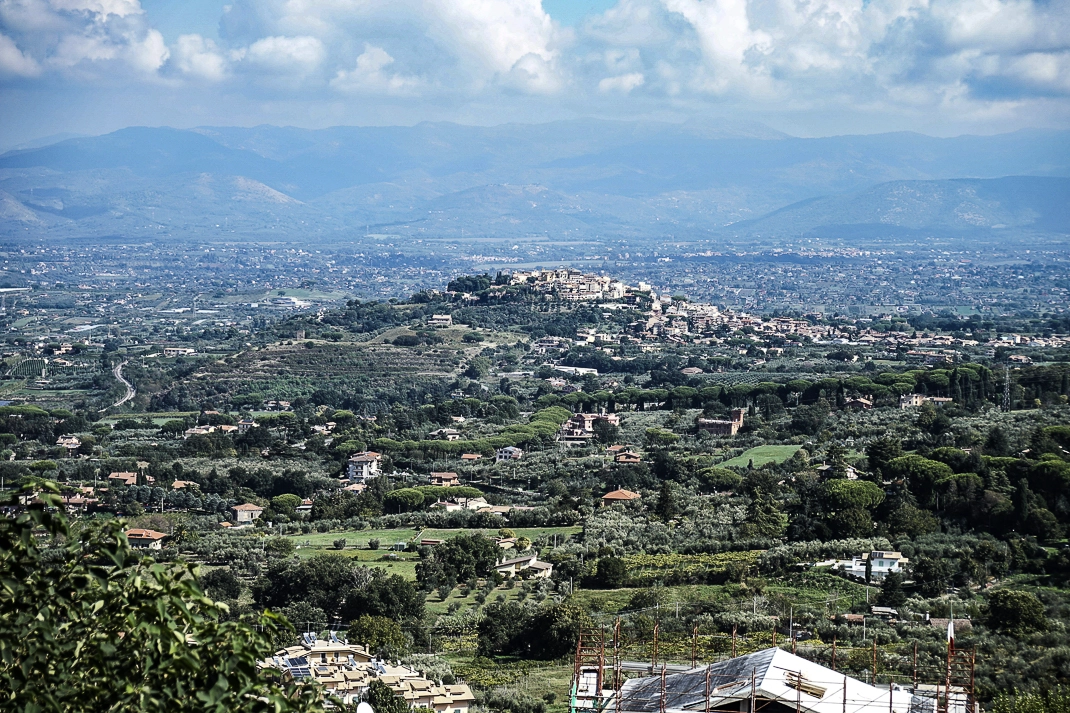
Monte Porzio Catone: The view from the central terrace.
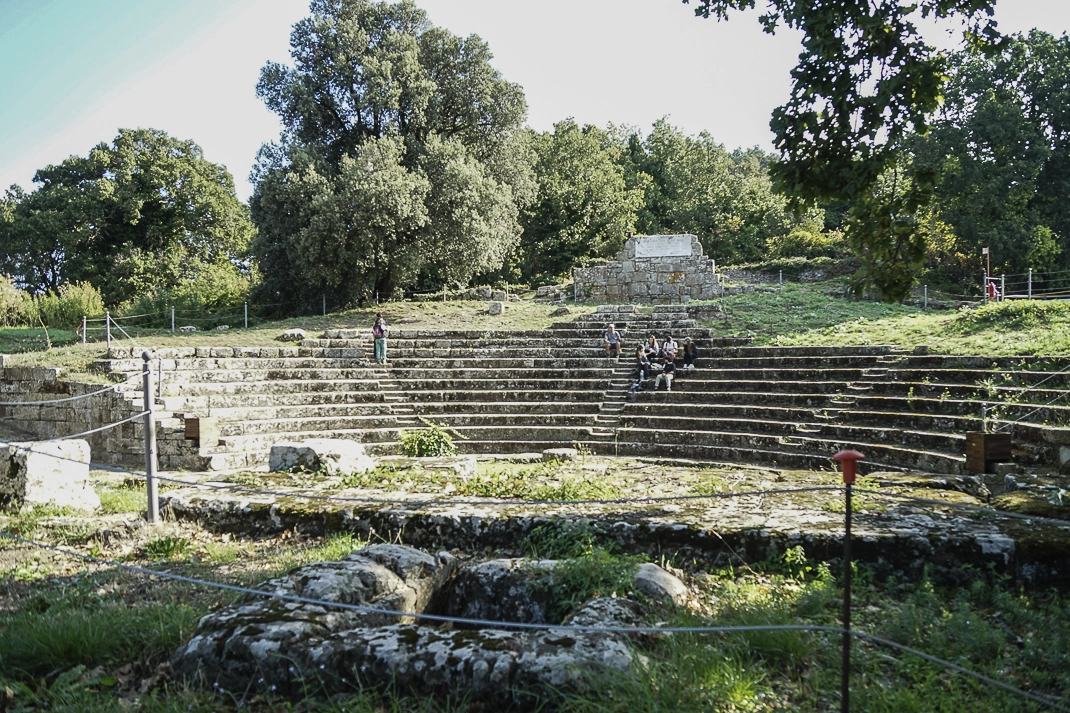
Tuscolo’s theater was built in 75 B.C.
Walking around Rome it’s easy to see monuments and ruins from its glory days as a republic and an empire. But 20 miles southeast of Rome there are remains of the glorious life that happened 3,400 years ago.
Tuscolo, or Tusculum in English, was one of the leading cities of the Latin League and fought Rome at the Battle of Lake Regillus in 496 B.C. It later became an ally of Rome and, in 381 B.C.
In a park at a cool 670 meters (2,200-foot) elevation, there are remains of a theater, a forum, temples and a basilica. Tuscolo is also near the charming hill town of Monte Porzio Catone where you can hang in shady piazzas, wander the alleys of its old town and have a cheap, home-cooked meal.
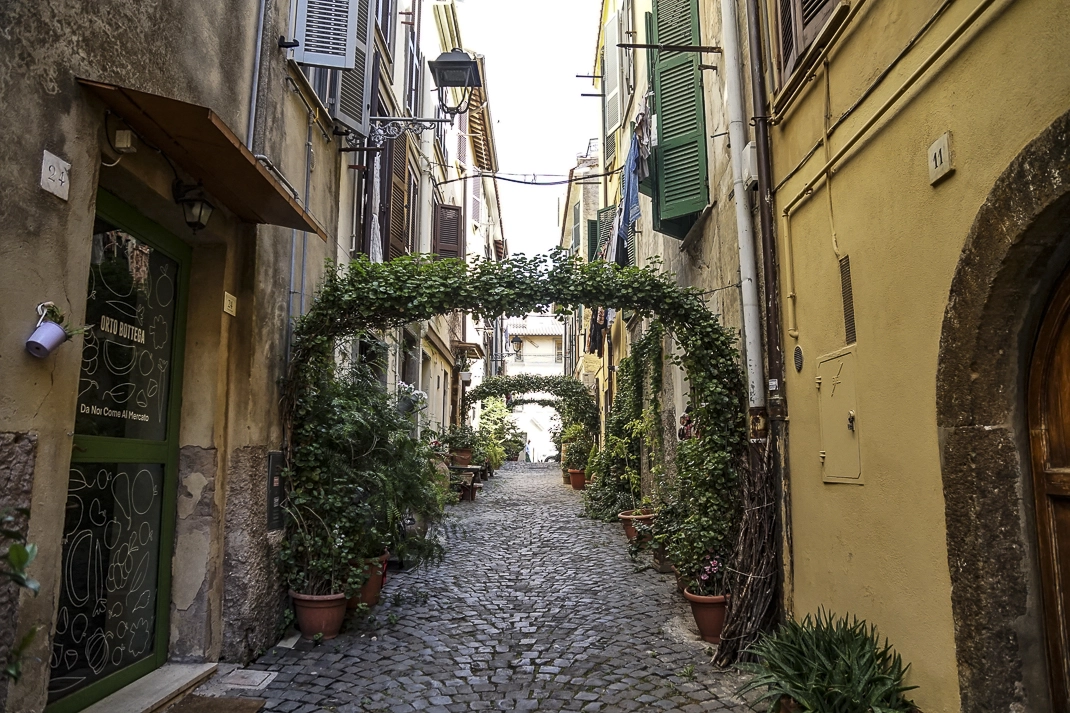
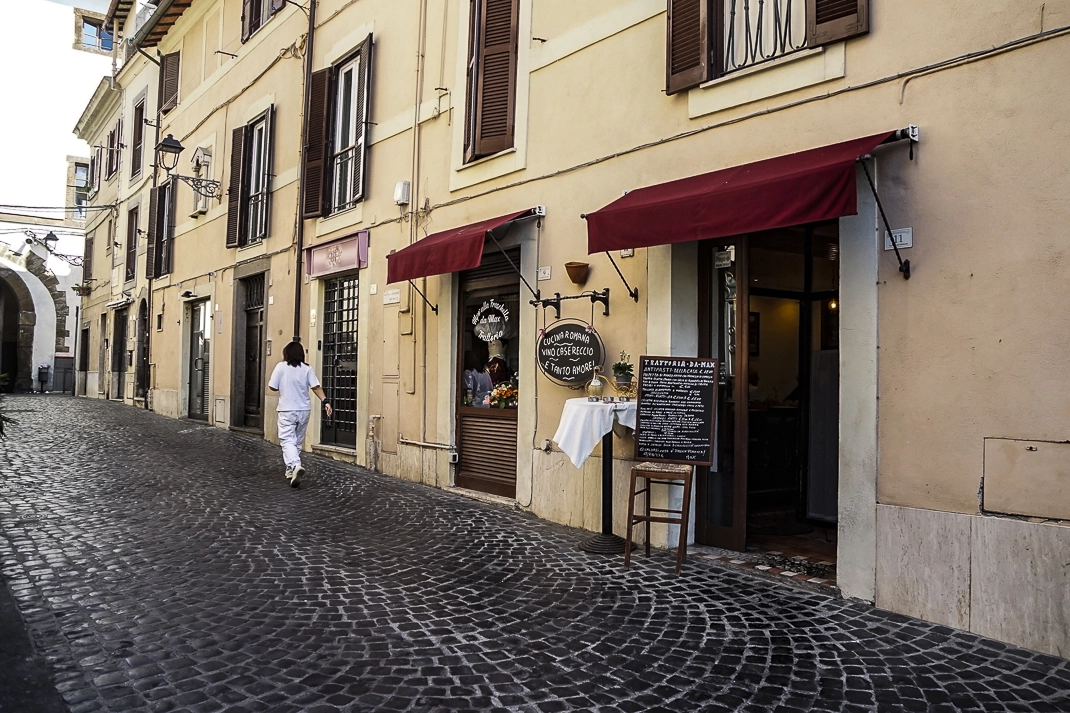
Monte Porzio Catone: Vicolo del Giglio.
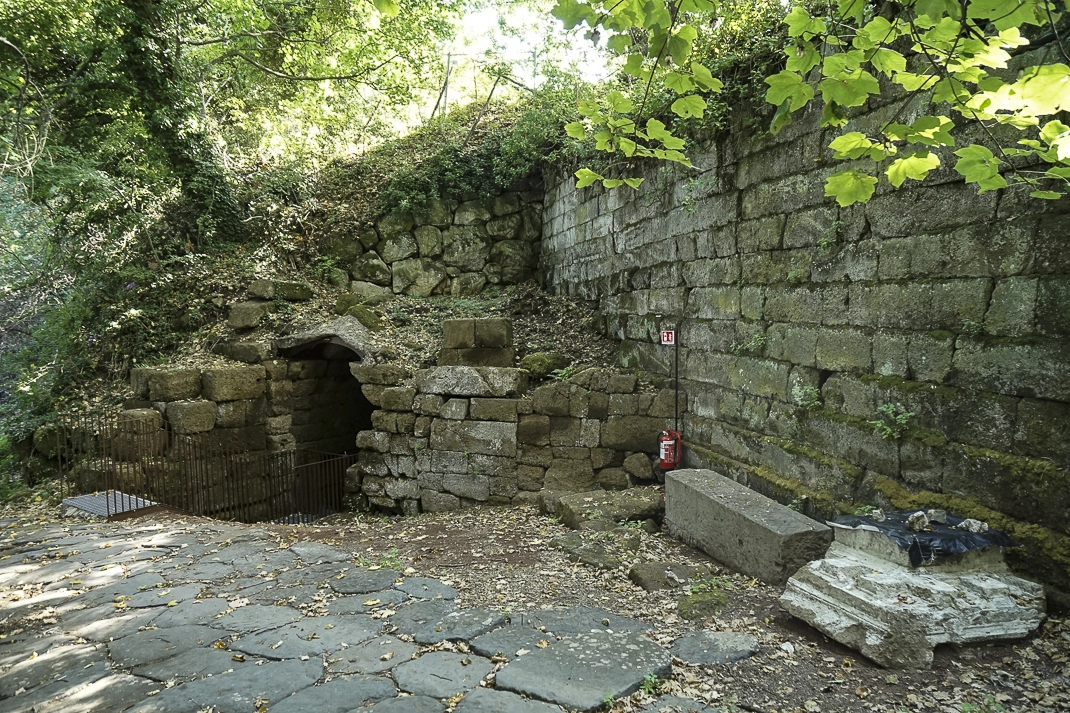
Tuscolo: Remains if an ancient villa.
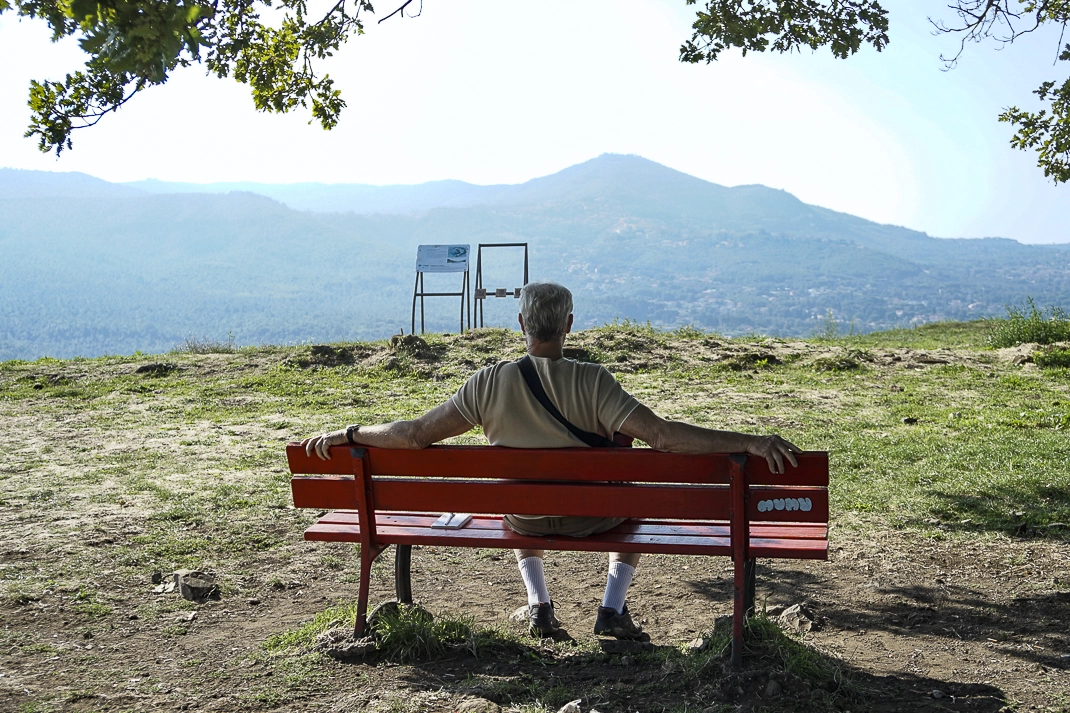
Tuscolo: John on one of the benches in Tuscolo Parco.
Things to do
1 • Tuscolo. Follow the signs off Via Tuscolana and park on the side of the road. Walk up the road under shady trees and look back at the beautiful views of rural Lazio.
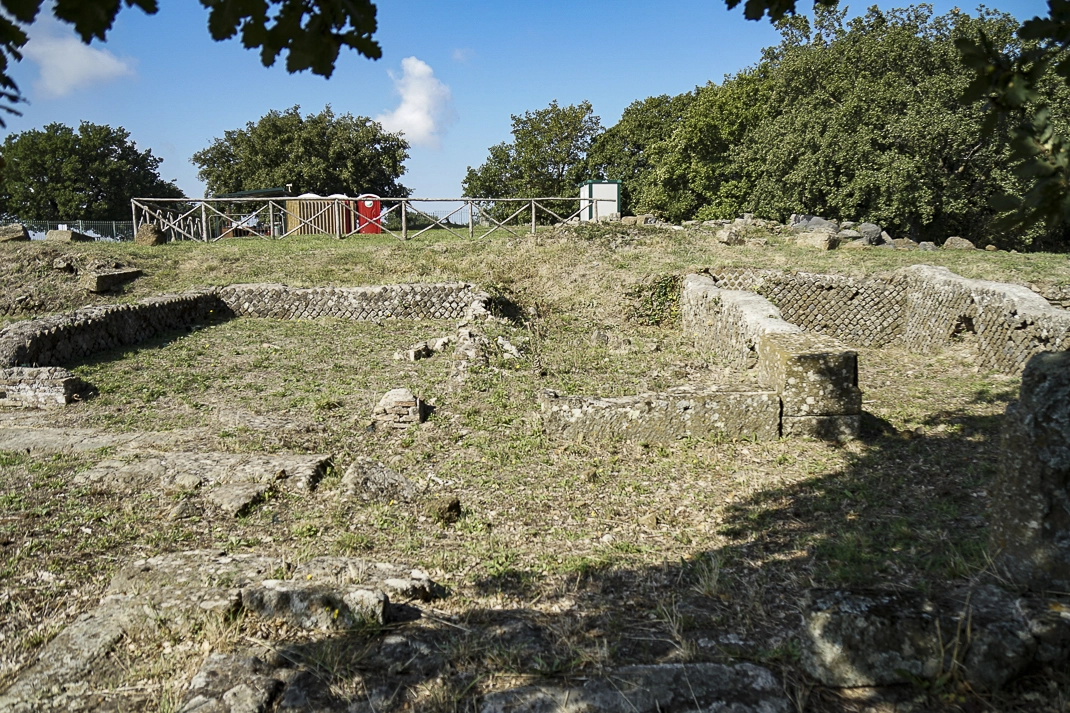
Tuscolo is a small complex. It can be toured in less than an hour. Get a description map at the gate and explore the different ruins. The first you’ll see is the remains of a room with painted walls and black and white mosaic floor.
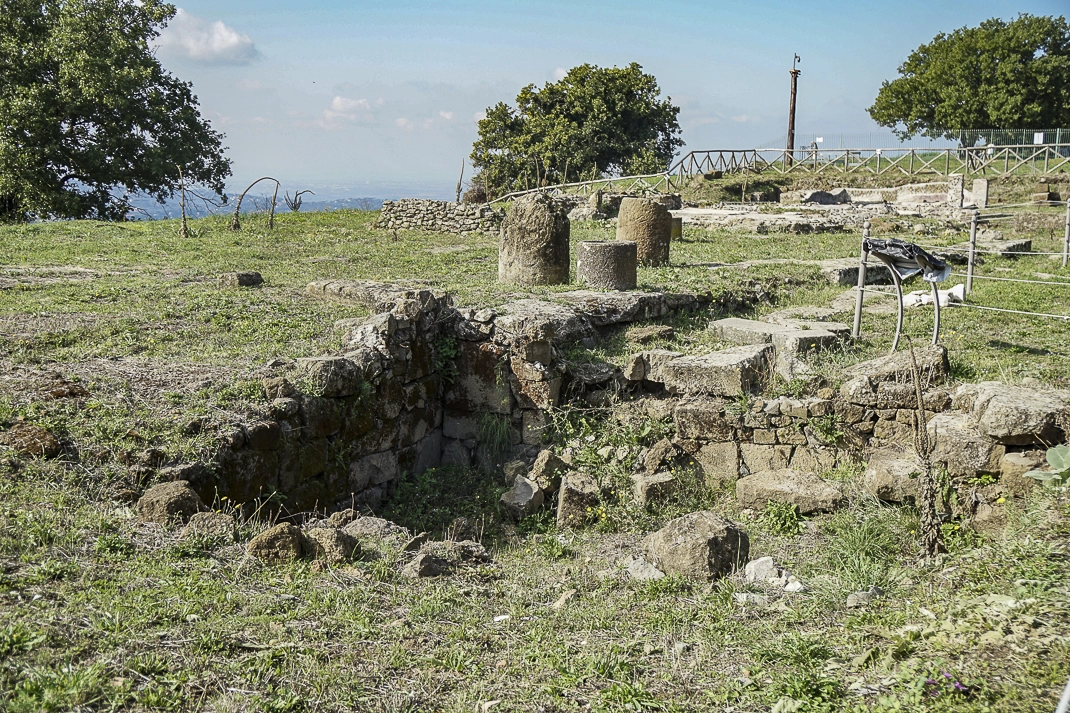
You’ll pass a 10-by-10-meter ancient temple base from the 6th century B.C. and the remains of columns from a basilica dated the 1st century B.C. Keep walking and you’ll see the remarkably preserved remains of the theater. When it was built in 75 B.C. it held 500 spectators. In the 1st century A.D. it was expanded to accommodate 2,000.
The original wooden stage no longer exists, nor is the decorative marble. What is visible are the 13 rows of grandstand, the stage floor now covered in grass, a giant oak tree and the beautiful Lazio countryside beyond. Near the entrance, stop by the six rooms left from little temples of 1st century B.C. You can still see the mosaic floor.
Info: Strada Provinciale 73B, 9:30 a.m.-6:30 p.m. Sunday, April and October; 9:30 a.m.-1:30 p.m., November and March, Sunday; 9:30 a.m.-7:30 p.m. Saturday-Sunday, May-September, € 3
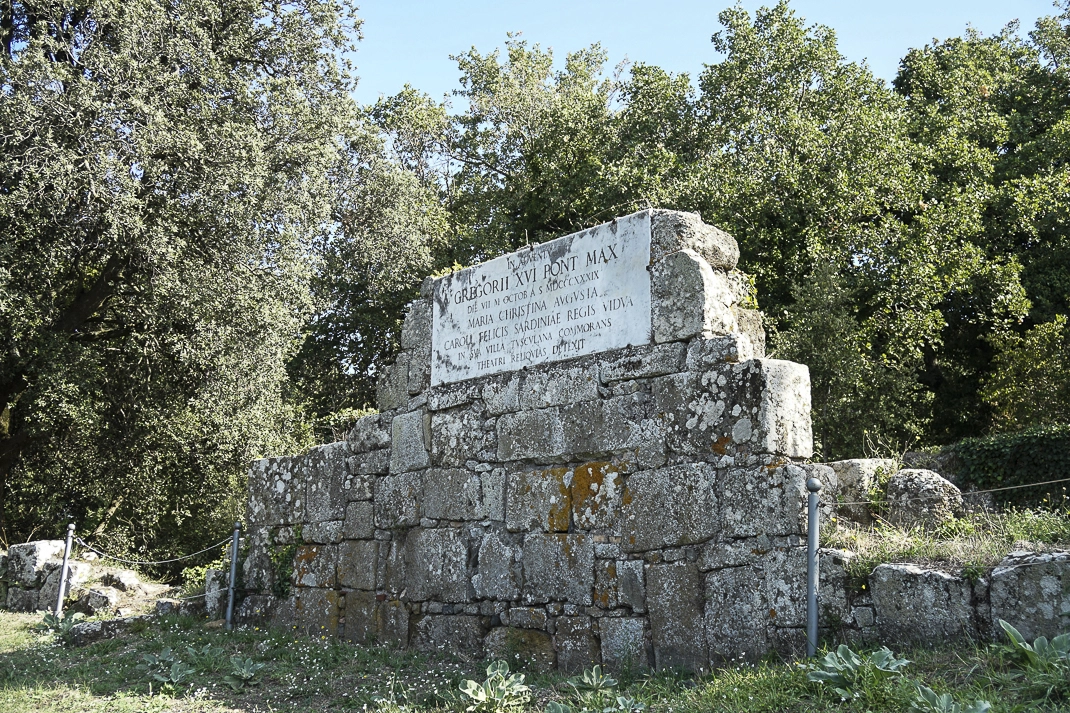
Tuscolo: Commemorative effigy.
Tuscolo: The remains of a basilica from 1st century B.C.
Tuscolo: Entrance to the heating room.
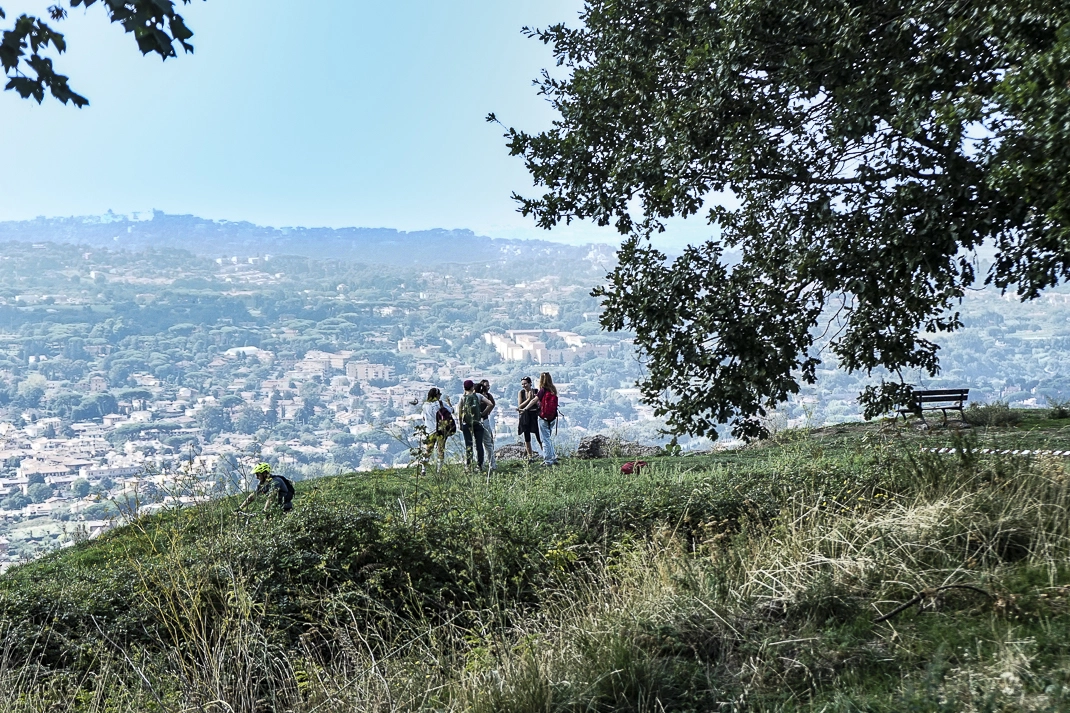
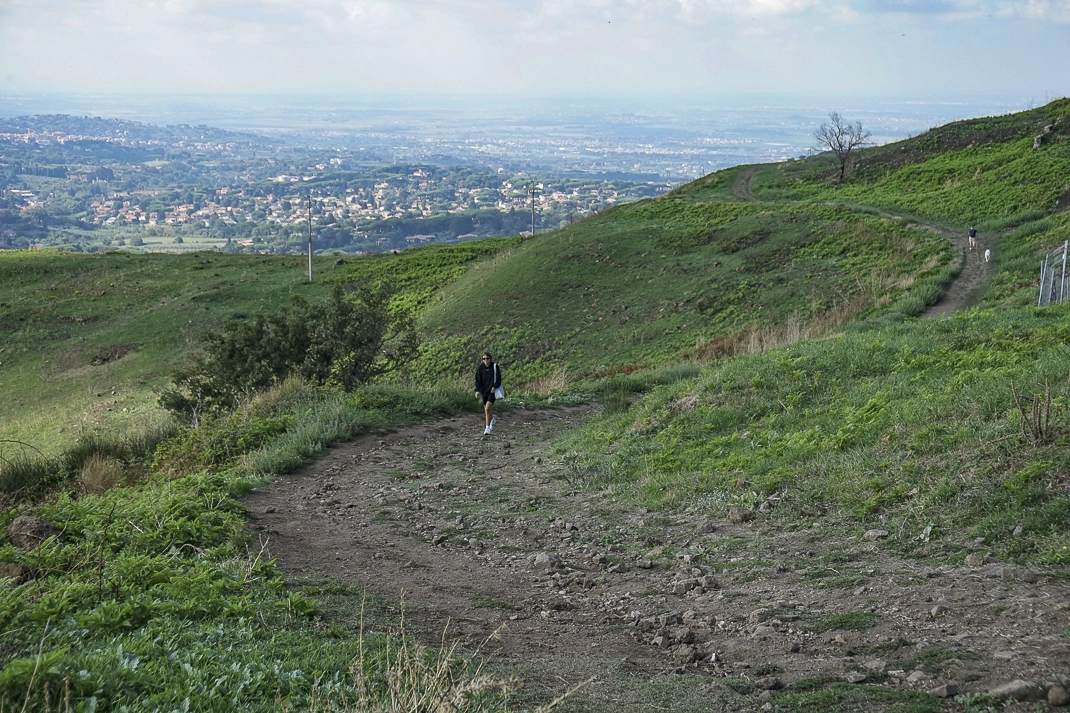
2 • Tuscolo Parco. Tuscolo is more than an archaeological site. It’s also a park. Go back out the gate and outside a small fence. Walk up the grassy hill on a dirt path from where you can get panoramic views of the Lazio countryside and the hill town of Rocca di Papa and Frascati, the center of Lazio’s wine country. The path serves as a popular mountain bike path and the 10-kilometer Giro del Tuscolo race.
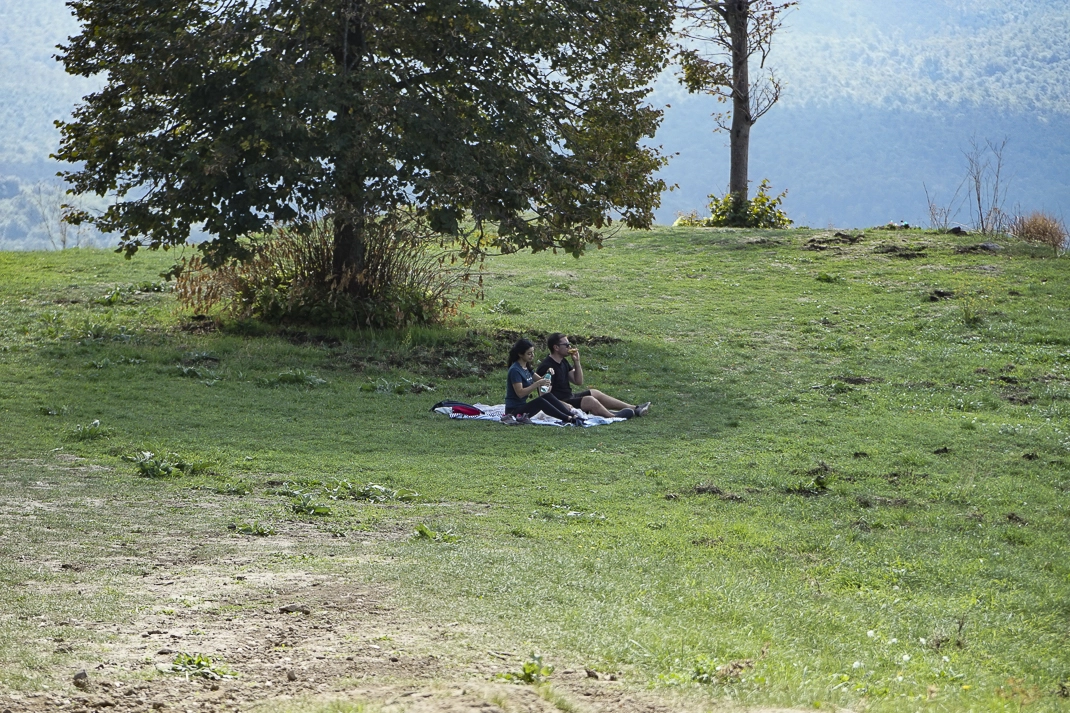
The trail wraps around the outside of the theater under big chestnut trees. Go to the back end of the hill and you have one of the best panoramic views in all of Lazio. Better yet, go to nearby Monte Porzio Catone and one of its alimentaries (meat and cheese store). Pack a lunch, buy a bottle of local Castelli Romani wine and take it to one of the plots of grass for a picnic.
Tuscolo: Two picnicking in Tuscolo Parco.
Tuscolo: The view from Tuscolo Parco’s trail.
3. Monte Porzio Catone. It’s a seven-minute drive from the park and is a pleasant place to hang out for lunch after touring the ruins.
This town of 8,500 is beautiful. Tall Mediterranean pine trees and trimmed Lecci trees line the hill leading to town. It empties into Piazza Borghese where there’s a lookout point to the Lazio countryside below.
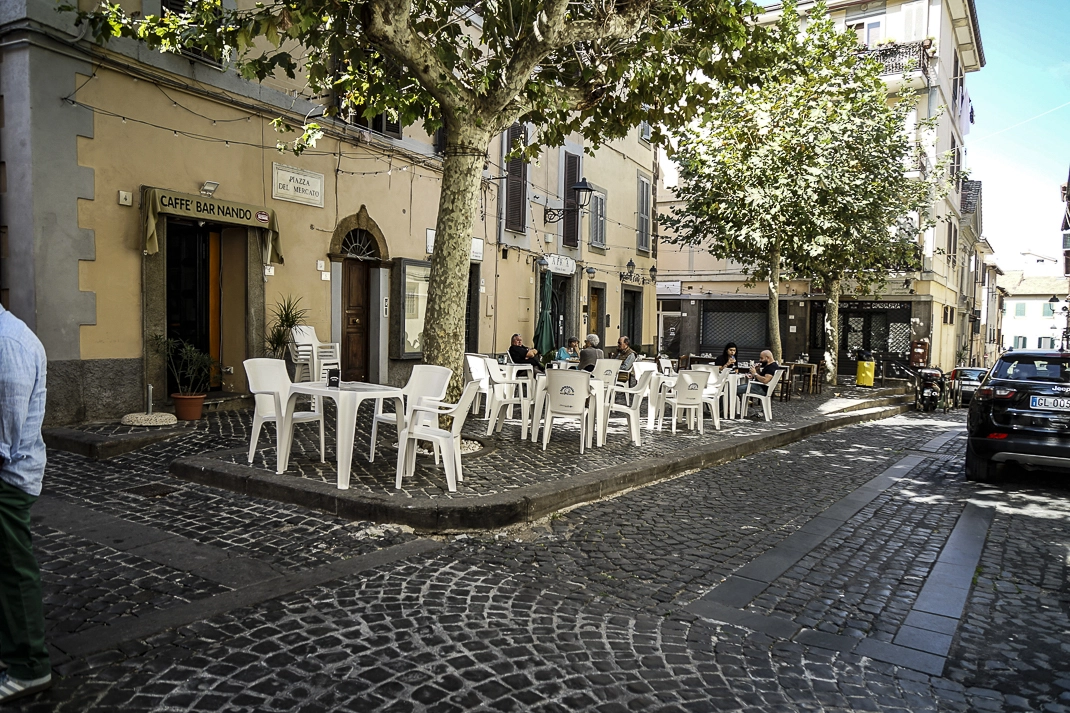
Next to the piazza is a towering arched gate leading to the centro storico. Walk up the cobblestone to Caffe’ Bar Nando where you can order a Casata Merge’, a crisp white wine from Castelli Romani.
Wander the narrow streets and find Vicolo del Giglio, perhaps the prettiest street in town with its three vine-covered arches over an alley lined with potted plants. Or visit Piazza Borghese and its large collection of red geraniums.
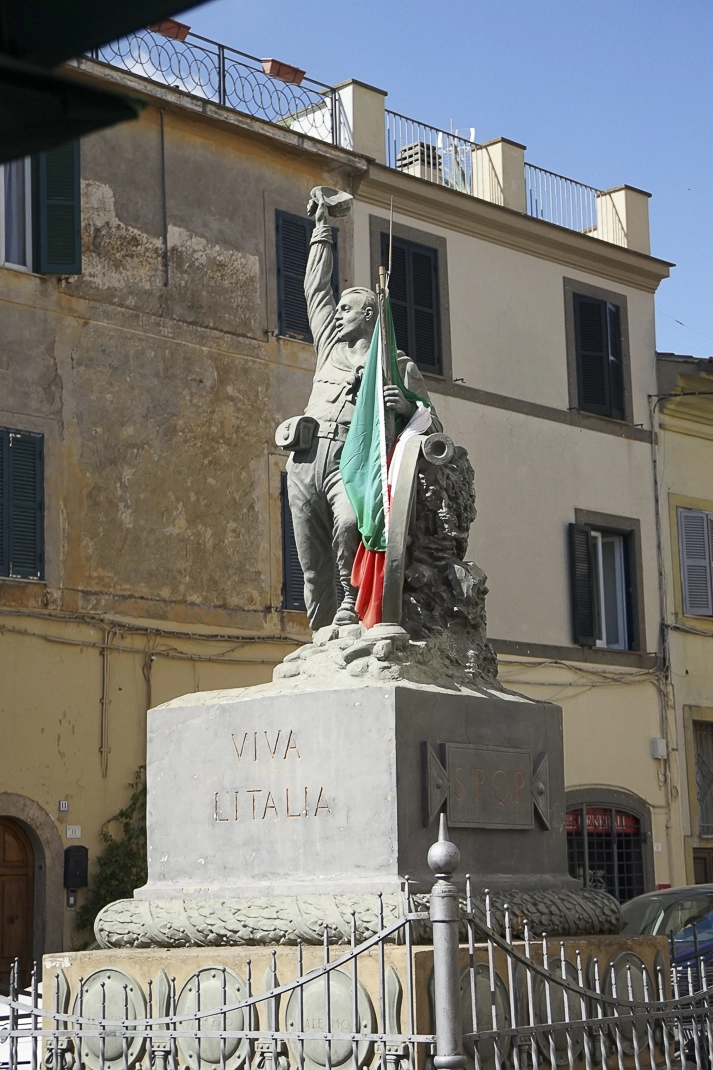
Monte Porzio Catone: The war statue in Piazza Porzio Catone.
Monte Porzio Catone: Caffe’ Bar Nando.
Latin League was Rome’s ally then enemy
In the early days of Tuscolo, it was one of 30 city-state settlements that formed the Latin League. The Latin League existed between 793 B.C.-338 B.C. It was an alliance of Latin communities in central Italy, originally formed for mutual religious, political and military purposes as a defense for the Latin tribe of the Italic people.
In 493 B.C., however, they formed an alliance in which Rome and the Latin League would share the spoils of military campaigns, but all wars would be led by Roman generals.
The city-states, and sometimes the entire Latin League, had wars with Rome where its republic was gradually gaining strength. But soon the Roman Republic grew to where it overwhelmed the Latin League which was dissolved in 338 B.C. and all the citizens became Roman citizens.
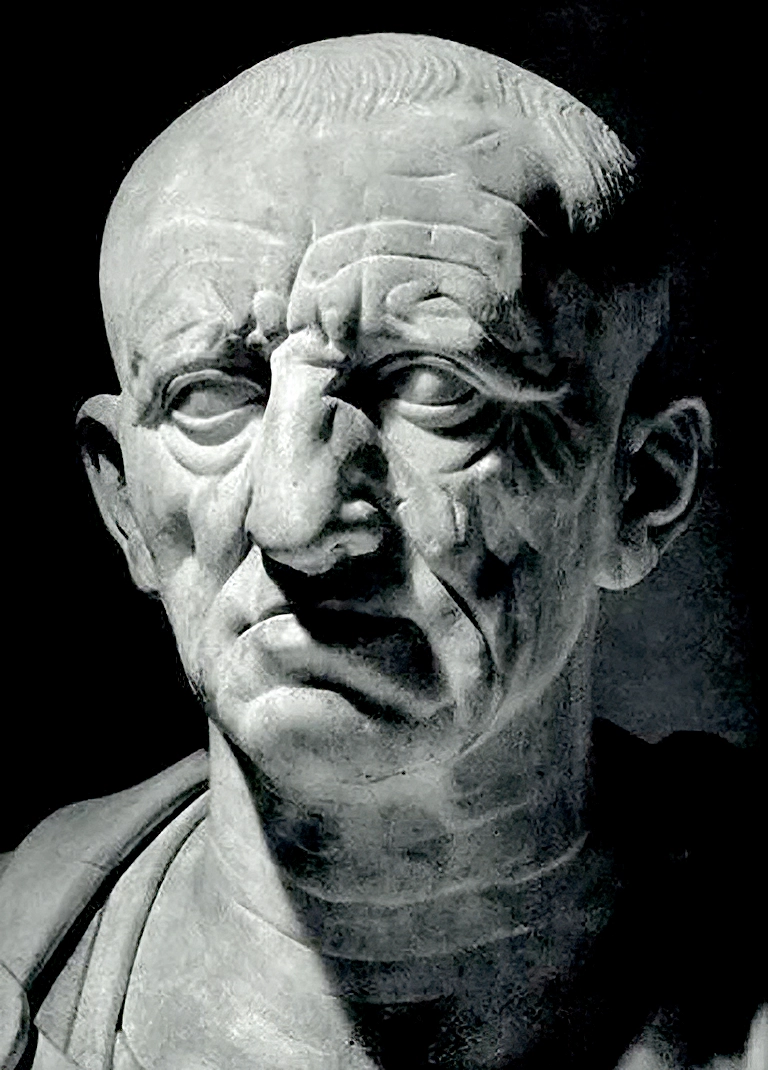
Marcus Porcius Cato.
Where is it:
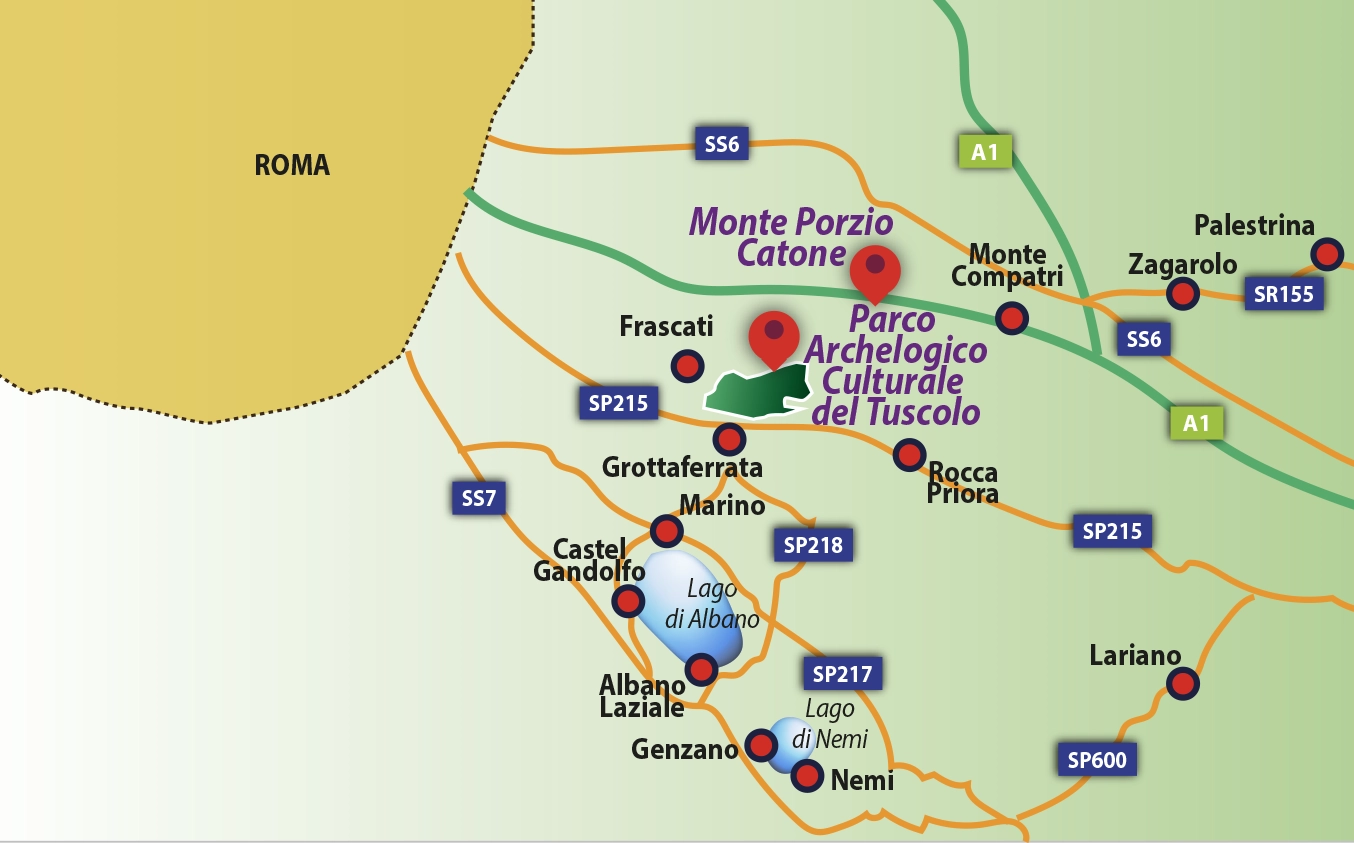
20 miles (35 kilometers) southeast of Rome.
How to get there: Regional trains run regularly from Rome Termini to Frascati in about 30 minutes.
The 30-minute ride is € 2-€ 5. From Frascati, take a bus toward Monte Porzio Catone. Monte Porzio Catone does not have a current railway station.
Trenitalia offers a train-and-bus connection from Frascati to Piazza Borghese in the town center. Tuscolo itself is several kilometers outside town, so check current bus schedules before setting out
For more information:
Parco Archeologico Culturale di Tuscolo, Via del Tuscolo, Monte Porzio Catone,